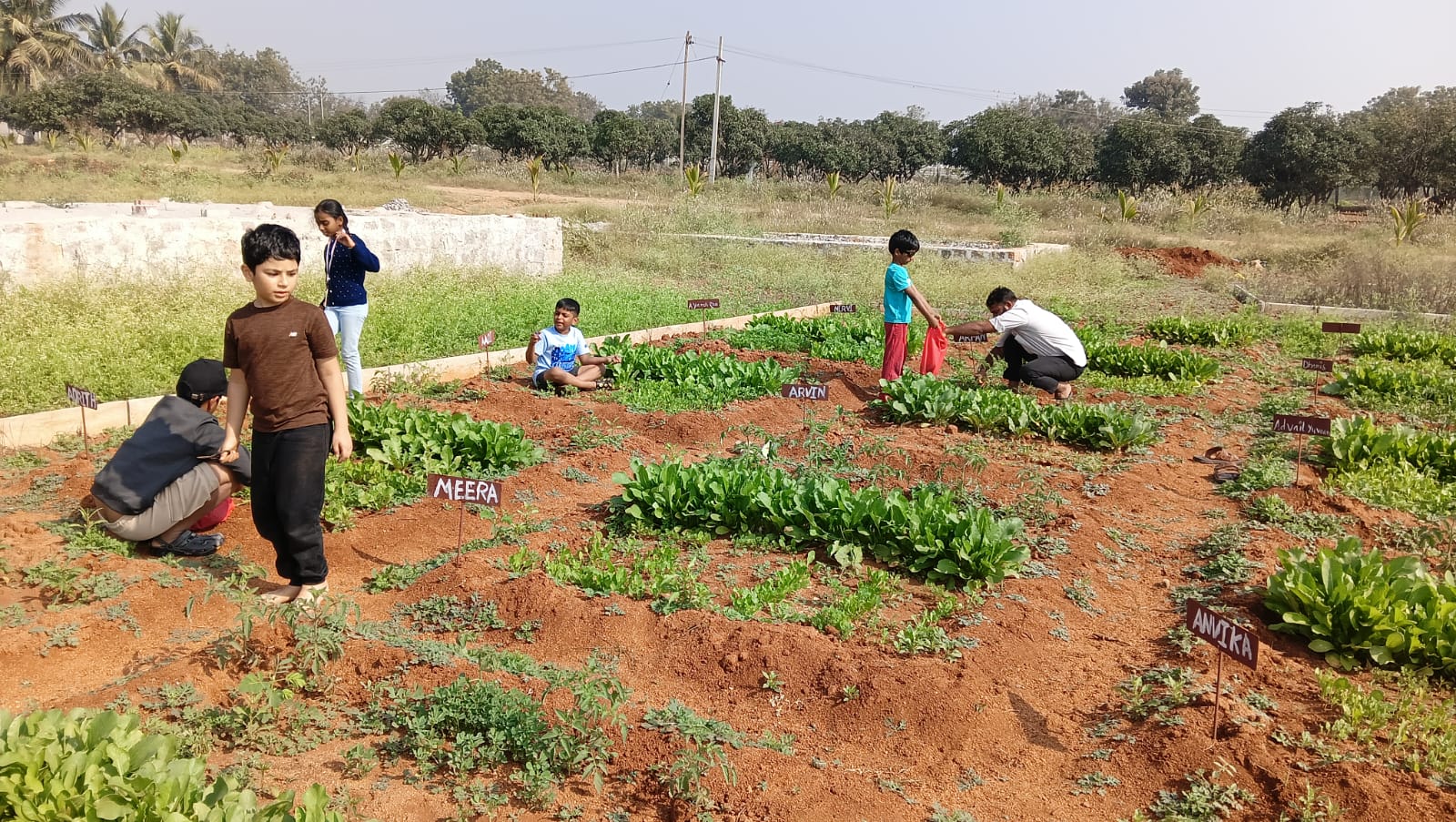
The sixth session of the Seeds to Vegetables program was a vibrant blend of creativity, ecological learning, and hands-on farming experiences. Designed to help children understand where their food comes from and to build a deeper relationship with nature, this session introduced them to essential farm practices while keeping the activities engaging and enjoyable. From discovering pollinators through art to threshing rice like traditional farmers, the children spent the day fully immersed in the world of agriculture.
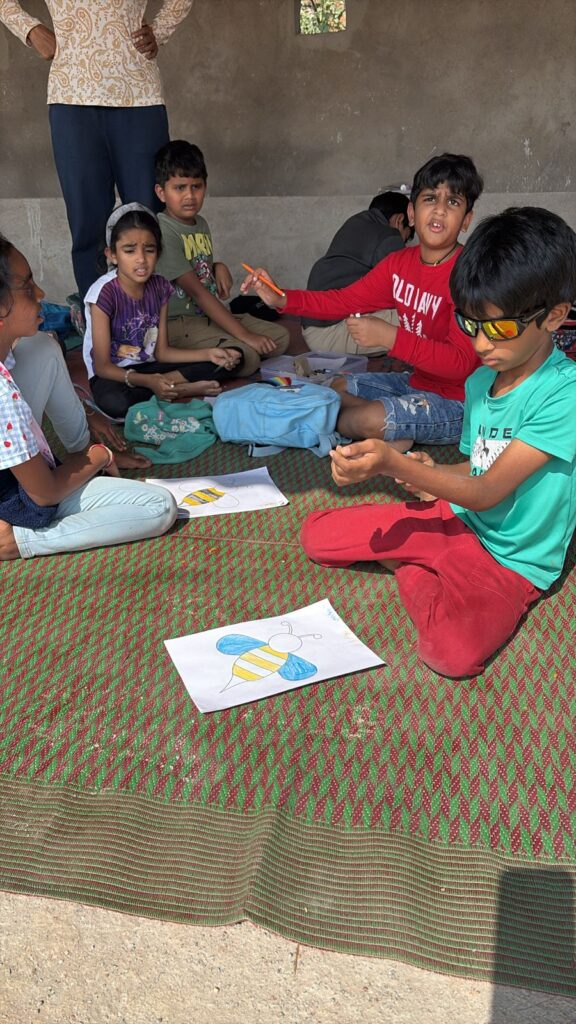
Exploring Pollinators Through Coloring
The day began with an art-based learning activity focused on pollinators. Each child received sketches of various pollinating creatures—such as bees, butterflies, and other beneficial insects—and used sketch pens to color them. While this looked like a simple coloring exercise, it opened the door to an important ecological conversation.
As the children filled the pages with color, they learned how pollinators play a crucial role in the food chain. They understood how insects help plants reproduce by transferring pollen, and why farms depend on these small but mighty helpers. The combination of art and ecology helped them grasp complex concepts in a fun and memorable way. Their colorful illustrations became a reminder of the delicate balance that nature maintains to produce the food we eat.
Harvesting the Remaining Palak and Methi
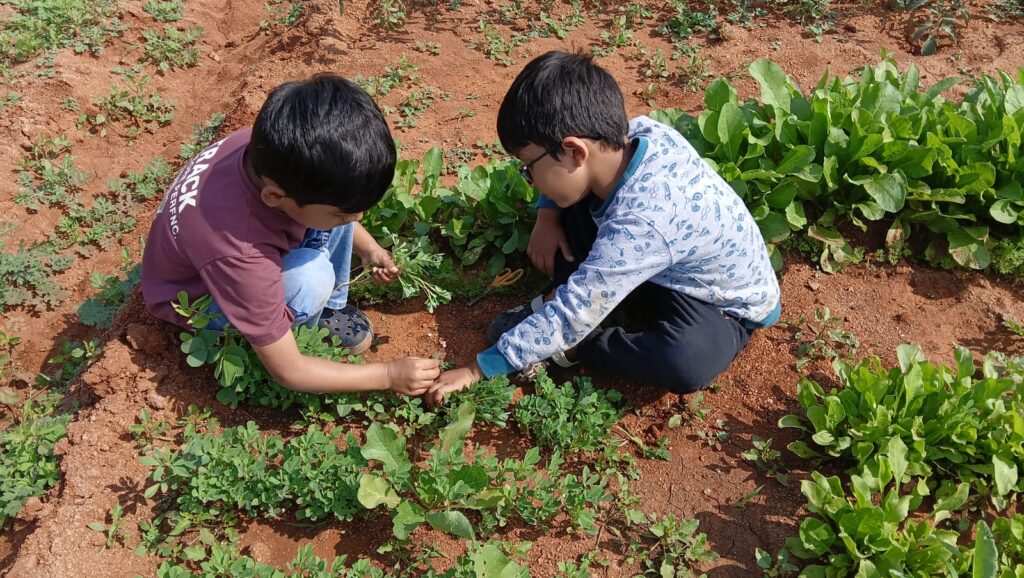
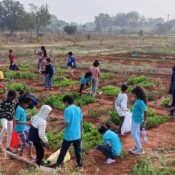
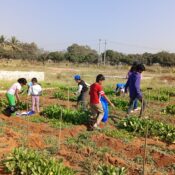
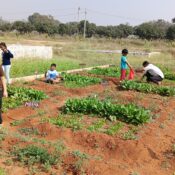
The previous week, the children had completed the first round of harvesting from their patches. During this sixth session, they returned to their patches to harvest the remaining palak and methi that had continued to grow. This activity was particularly satisfying for them, as they had been nurturing these crops for weeks with care and patience.
Understanding Sticky Traps and Pest Management
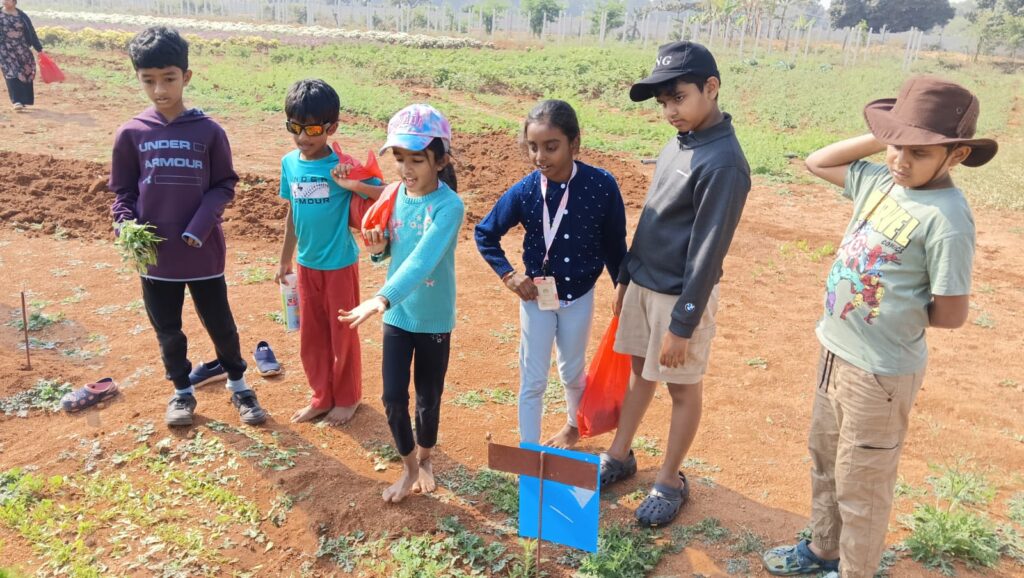
A highlight of the session was the introduction to sticky traps, an important tool used in natural pest control. The children were shown brightly colored boards coated with gum on both sides. These traps attract insects with their color, and once the insects land on them, they stick to the adhesive surface.
This simple demonstration helped the children understand how farmers monitor and control pests without using chemicals. They learned that sticky traps are part of Integrated Pest Management (IPM), a sustainable method that keeps plants safe while protecting the environment. Seeing the traps in action gave the children insight into the challenges farmers face and how creative solutions help protect crops.
Observing the Compost Pit: Understanding Soil Health
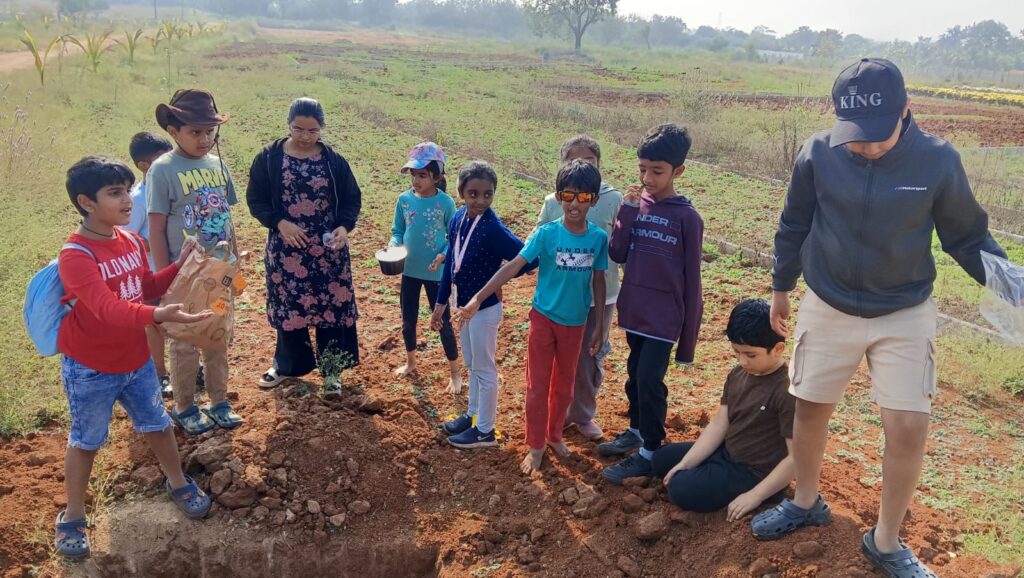
Another meaningful part of the session was observing the compost pit. The children gathered around to see how farm waste, kitchen scraps, and dry leaves break down over time to form nutrient-rich compost.
They learned how microorganisms help decompose organic matter and how compost improves soil structure, fertility, and moisture retention. Understanding composting helped them connect the dots between waste, soil health, and plant growth—an essential concept in sustainable farming.
Experiencing Traditional Rice Threshing
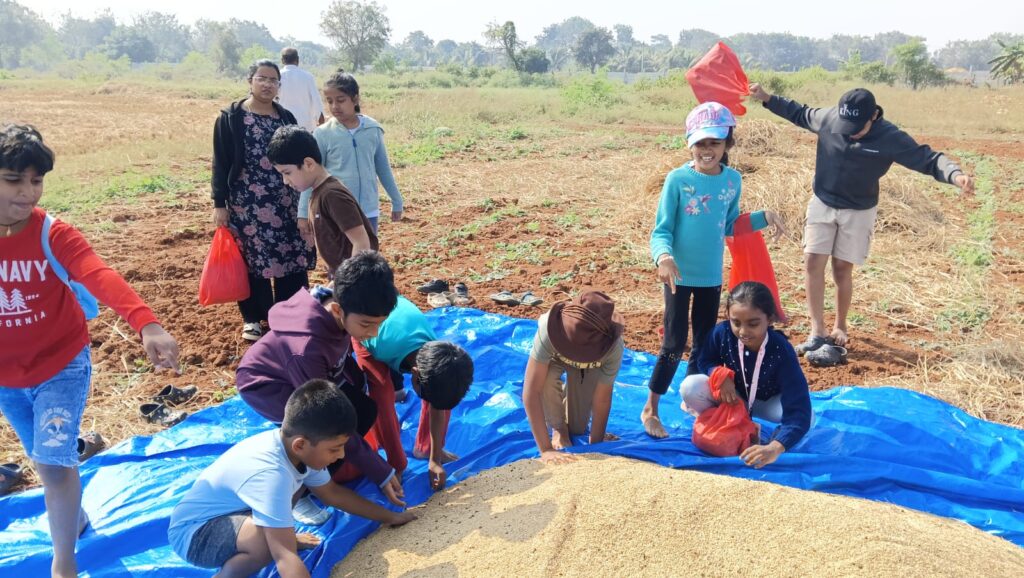
One of the most hands-on activities of the day was threshing rice. Using harvested rice stalks, the children practiced the traditional method of threshing—beating the stalks against a hard surface to separate the grains. This ancient technique amazed them, and they quickly understood how much effort goes into producing something as common as rice.
As the grains loosened from the stalks, the children saw firsthand how raw rice transforms from plant to food. The rhythm of threshing, the texture of the stalks, and the satisfaction of seeing rice grains fall freely made this activity both educational and exciting..